Fund of Ag Beef Prod Answer Key
The Us currently consumes more meat per capita than whatever other country.
In the by decade, however, the US has seen a burgeoning culling meat industry, including cultivated products from companies similar Beyond Meat and Incommunicable Foods, Mosa Meat, Memphis Meats, BlueNalu, and Future Meat Technologies.
Despite the industry's growth, these products — nevertheless more expensive than conventional meat and lacking diversity — have yet to meaningfully reduce US meat consumption.
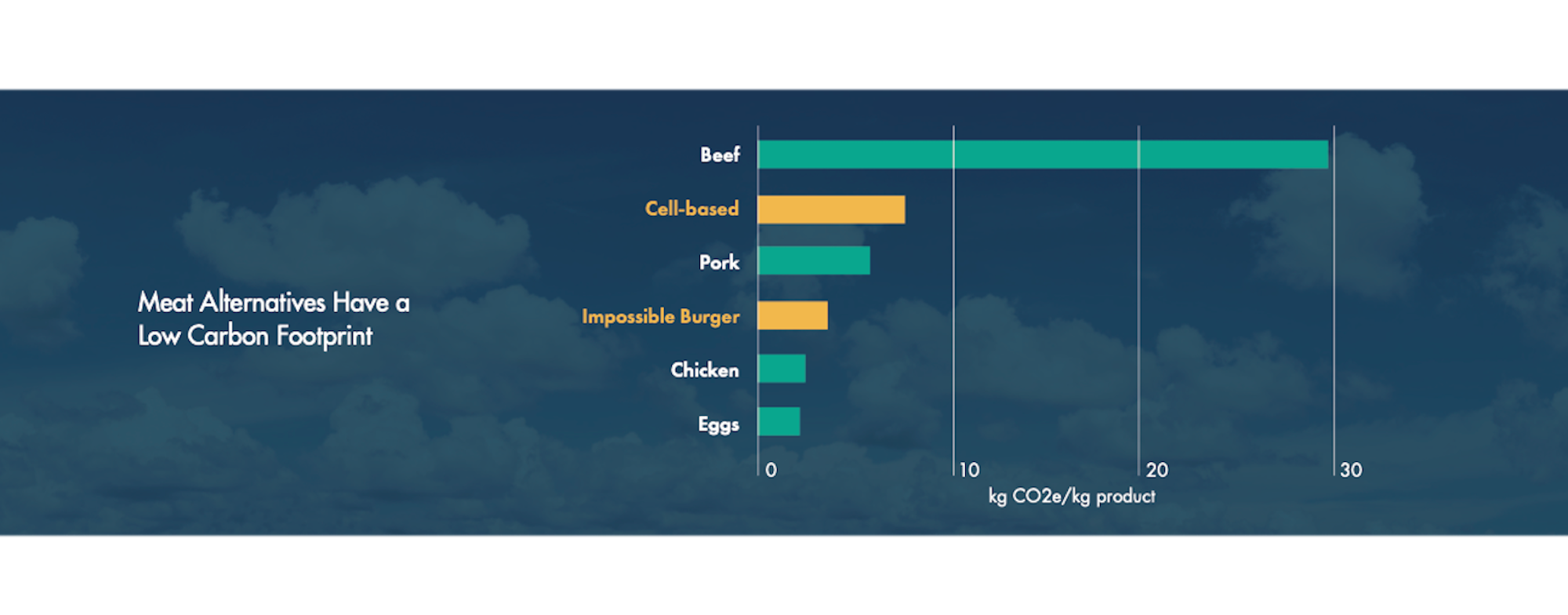
With sufficient research and development (R&D) for better products and product, the benefits for the environment, public health, and beast welfare could be enormous. Replacing 45% of beef with plant-based alternatives could, for example, reduce US GHG emissions from agronomics by almost 20 pct.
To realize these benefits, the US government should make sizable investments in alternative meat enquiry and development.
Read the full study here.
Alternative Meats Tin Mitigate Externalities Related to Animal Agriculture
The externalities from animal agriculture cost the American public at to the lowest degree $388 billion per yr and include the post-obit:
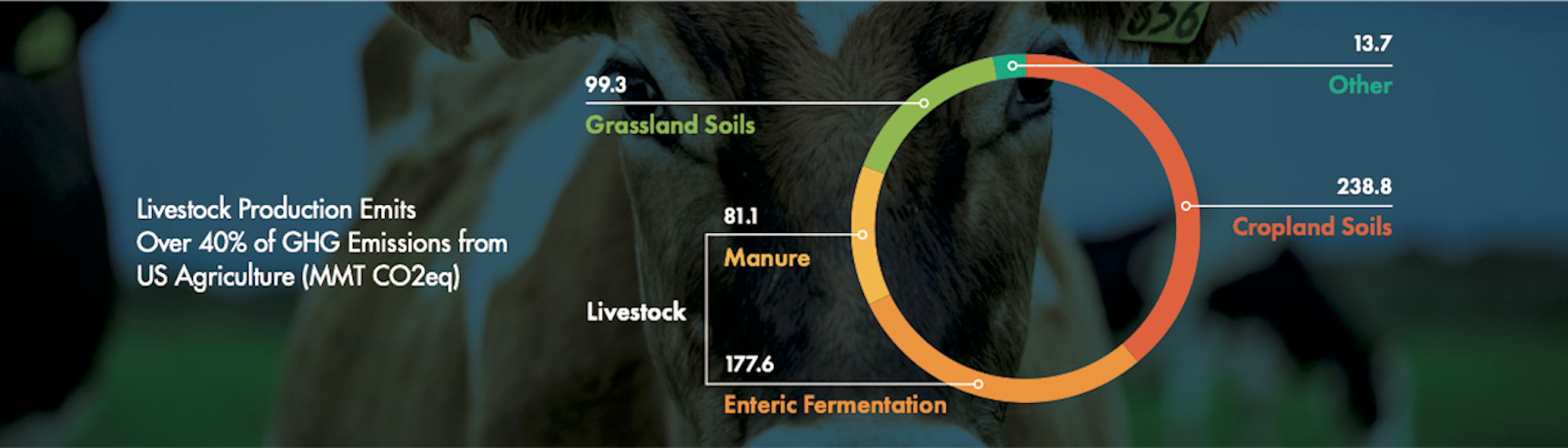
- Brute agronomics produces almost half of all greenhouse gas (GHG) emissions from agronomics globally and at least 42 percentage of US agronomical emissions.
- Animal agronomics uses well-nigh 80 percent of agricultural land worldwide.
- Globally, animal agriculture is ane of the top five sources of air pollution deaths, and manure-related pollution from livestock operations is a major cause of eutrophication and expressionless zones in waterways and bodies of water around the earth.
- The consumption of red and candy meat has been linked to increased rates of colorectal cancer, eye disease, and other nutrition-related issues.
- Overuse of antibiotics by livestock producers has contributed to the rise of antibody-resistant bacteria, increasing the adventure of highly virulent bacterial infections. And every bit a major driver of deforestation and habitat loss, brute agronomics increases the risk of zoonotic pandemics.
Public Investment in Alternative Meats
With the help of the federal government, the Us culling meat industry can exist a driving force for domestic economic growth by becoming an international leader in the fast-growing market for alternative meats. According to Farm Creature Investment Adventure and Return (FAIRR), projections of future market share put culling proteins — including milk and egg alternatives — between sixteen and 62 percent of the global protein market by 2050.
A $50 million federal investment would create more than ii,000 jobs and add together well-nigh $1.5 billion to the Us economic system over 10 years. If the alternative meat market grows ten-fold by 2030, as some posit it can, the industry could create near 200,000 jobs in the Us.
Read the total report here.
The Federal Regime is Uniquely Suited to Fund Necessary Research
Loftier-adventure, pre-competitive, and multidisciplinary R&D is cardinal to the alternative meat sector overcoming its barriers to growth and widespread adoption. Such research often necessitates public support.
For long-term growth, the cultivated meat industries must answer bones scientific questions near cell biology, genomic sequencing of potential inputs, and techniques to improve production processes.
Due to the multidisciplinary nature of the needed scientific inquiry, alternative meat producers and researchers are hard-pressed to notice capable collaborators and partners. This is an issue the US government has a proven track record of solving — a notable success story beingness the Advanced Manufacturing Institutes created by the Obama administration.
How the Federal Government Should Invest
We recommend that the federal government:
- Fund and develop collaborative and multidisciplinary public-individual partnerships aimed at culling meat R&D.
- Expand existing R&D funding for alternative meat at agencies such every bit the Agronomical Research Service, the National Institute of Food and Agronomics, and the National Science Foundation.
- Employ a mission-oriented approach that targets innovations that could lead to price reductions, cell-line identification, and the evolution of whole-cut meat alternatives.
Read the full report here.
Source: https://thebreakthrough.org/issues/food/case-for-public-investment-in-alt-proteins
0 Response to "Fund of Ag Beef Prod Answer Key"
Postar um comentário